United States · New Hampshire RSA 266:58-a; RSA 266:61-a, IX · checked November 2026
New Hampshire window tint law
Aftermarket film on the front side windows must let through at least 70% of light, so in practice almost no front tint is allowed. On cars, rear side windows and the rear window must let through at least 35%; on SUVs, vans and pickups they can be any darkness.
New Hampshire tint limits
| Window | Cars (saloons, coupes, hatchbacks, estates) | SUVs, vans and pickups |
|---|---|---|
| Front side windows | 70% | 70% |
| Rear side windows | 35%Tint behind the driver needs outside mirrors on both sides. | Any darknessMultipurpose passenger vehicles and pickups may match the federal limits for factory privacy glass, which set no minimum behind the driver; outside mirrors on both sides are required. |
| Rear window | 35%Tint behind the driver needs outside mirrors on both sides. | Any darknessAny darkness allowed by the federal factory-glass rules; outside mirrors on both sides are required. |
Percentages are the minimum visible light transmission (VLT): the share of light the window must let through. Lower is darker.
Check a film against the law
Pick the shade you're thinking of for the front and rear. The car shows roughly how it looks, and each window gets a verdict for New Hampshire, allowing for the light your factory glass already blocks.
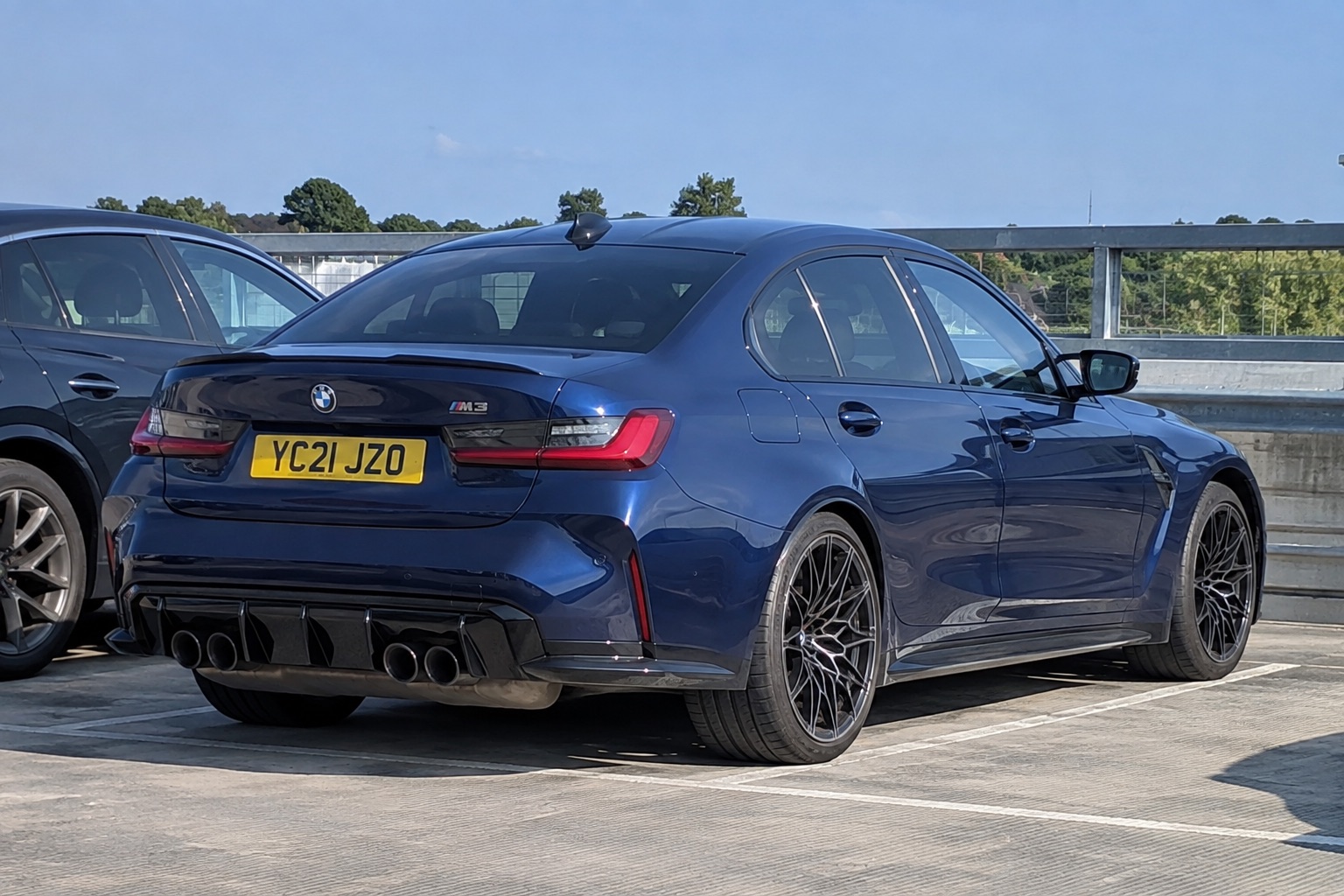
Film on the front side windows
Film on the rear windows
- Too dark
Front side windows
70% film on clear glass ≈ 56% light through. New Hampshire allows 70% or lighter.
- Legal
Rear side windows
50% film on clear glass ≈ 40% light through. New Hampshire allows 35% or lighter. Tint behind the driver needs outside mirrors on both sides.
- Legal
Rear window
50% film on clear glass ≈ 40% light through. New Hampshire allows 35% or lighter. Tint behind the driver needs outside mirrors on both sides.
Borderline means the answer depends on your glass: factory glass lets through 70–85% before film. Ask your installer to meter the window after fitting.
The darkest film you can fit
The front side windows must let through at least 70% of light. That is measured through the glass and film together, so on typical factory glass (about 80%) you need film of about 87.5% or lighter. No common tint shade stays above it on typical glass; only clear heat-rejecting film is likely to pass. The rear side windows and rear window must let through at least 35%.
Factory glass isn't clear: it typically lets through 70–85% before any film goes on, and the two multiply. That's why film rated at the legal number usually meters too dark. How film combines with factory glass.
Other rules
| Rule | New Hampshire |
|---|---|
| Windscreen | No aftermarket tint on the windscreen except a strip no wider than 6 inches at the very top, which must let through at least 35% of light. |
| Mirrors | Outside mirrors on both the left and right are required if any window behind the driver is tinted. |
| Penalty | A violation (not a crime), with a fine of up to $1,000. Selling or inspecting a car with a tinted windscreen, or fitting such tint, is also an offence. |
| How it's measured | The law doesn't say; assume glass and film together |
Medical exemptions
People with a bona fide medical need can apply to the Commissioner of Safety for a special permit allowing tint on the windscreen or front side windows, but no darker than 35%. Medical certification can come from a New Hampshire-licensed provider or a provider affiliated with the US Department of Veterans Affairs.
Worth knowing
- HB 1178 (2026), which would have allowed 35% film on the front side windows, was voted inexpedient to legislate by the House in March 2026, so the 70% limit stands.
- Recent amendments only changed the medical permit: 2024 (ch. 48) and 2025 (ch. 129, allowing VA providers to certify).
- The statute does not say whether the percentage is measured through film and glass together.
See the shades
See this tint on your own car.
The picture above is drawn over a stock photo. The studio renders tint onto a photo of your car, at your angle and in your light. Upload a photo, open Window tint and choose a shade.
See this tint on your own carBoth the visualiser and the render are approximations of how film looks. Ask your installer to show samples and meter the result.
Questions
What is the darkest legal tint in New Hampshire?
The front side windows must let through at least 70% of light. That is measured through the glass and film together, so on typical factory glass (about 80%) you need film of about 87.5% or lighter. No common tint shade stays above it on typical glass; only clear heat-rejecting film is likely to pass. The rear side windows and rear window must let through at least 35%. These answers are for cars (saloons, coupes, hatchbacks, estates); the table above has the rules for sUVs, vans and pickups.
Is 5% tint legal in New Hampshire?
On the front side windows, 5% film is too dark (about 4% through on typical glass; limit 70%); on the rear side windows and rear window it is too dark (about 4% through on typical glass; limit 35%). Tint behind the driver needs outside mirrors on both sides. These answers are for cars (saloons, coupes, hatchbacks, estates); the table above has the rules for sUVs, vans and pickups.
Is 20% tint legal in New Hampshire?
On the front side windows, 20% film is too dark (about 16% through on typical glass; limit 70%); on the rear side windows and rear window it is too dark (about 16% through on typical glass; limit 35%). Tint behind the driver needs outside mirrors on both sides. These answers are for cars (saloons, coupes, hatchbacks, estates); the table above has the rules for sUVs, vans and pickups.
Is 35% tint legal in New Hampshire?
On the front side windows, 35% film is too dark (about 28% through on typical glass; limit 70%); on the rear side windows and rear window it is too dark (about 28% through on typical glass; limit 35%). Tint behind the driver needs outside mirrors on both sides. These answers are for cars (saloons, coupes, hatchbacks, estates); the table above has the rules for sUVs, vans and pickups.
Is 50% tint legal in New Hampshire?
On the front side windows, 50% film is too dark (about 40% through on typical glass; limit 70%); on the rear side windows and rear window it is legal (about 40% through on typical glass; limit 35%). Tint behind the driver needs outside mirrors on both sides. These answers are for cars (saloons, coupes, hatchbacks, estates); the table above has the rules for sUVs, vans and pickups.
Is 70% tint legal in New Hampshire?
On the front side windows, 70% film is too dark (about 56% through on typical glass; limit 70%); on the rear side windows and rear window it is legal (about 56% through on typical glass; limit 35%). Tint behind the driver needs outside mirrors on both sides. These answers are for cars (saloons, coupes, hatchbacks, estates); the table above has the rules for sUVs, vans and pickups.
Can I tint my windscreen in New Hampshire?
No aftermarket tint on the windscreen except a strip no wider than 6 inches at the very top, which must let through at least 35% of light.
Is there a medical exemption for tint in New Hampshire?
People with a bona fide medical need can apply to the Commissioner of Safety for a special permit allowing tint on the windscreen or front side windows, but no darker than 35%. Medical certification can come from a New Hampshire-licensed provider or a provider affiliated with the US Department of Veterans Affairs.
What is the fine for illegal tint in New Hampshire?
A violation (not a crime), with a fine of up to $1,000. Selling or inspecting a car with a tinted windscreen, or fitting such tint, is also an offence.
Sources
Checked against these in November 2026. Laws change: if you're close to a limit, confirm with the DMV or state police or your installer before you fit film. This page is a guide, not legal advice.