Australia · Road Transport (Vehicle Registration) Regulation 2017 (NSW), Schedule 2 (Light Vehicle Standards Rules), rules 44 and 44A · checked November 2026
New South Wales window tint law
Front side windows must let through at least 35% of light. Windows behind the driver can go down to 20% if the car has a rear vision mirror on each side, and goods vehicles such as vans and utes can have any darkness behind the driver.
New South Wales tint limits
| Window | Passenger vehicles (saloons, hatchbacks, estates, SUVs) | Goods vehicles (vans, utes, trucks) |
|---|---|---|
| Front side windows | 35% | 35% |
| Rear side windows | 20%20% only if the car has a rear vision mirror on each side; with only a driver's side mirror the limit is 35%. | Any darknessAny darkness behind the driver if the vehicle is designed mainly to carry goods and has a rear vision mirror on each side. |
| Rear window | 20%20% only if the car has a rear vision mirror on each side; with only a driver's side mirror the limit is 35%. | Any darknessAny darkness behind the driver if the vehicle is designed mainly to carry goods and has a rear vision mirror on each side. |
Percentages are the minimum visible light transmission (VLT): the share of light the window must let through. Lower is darker.
Check a film against the law
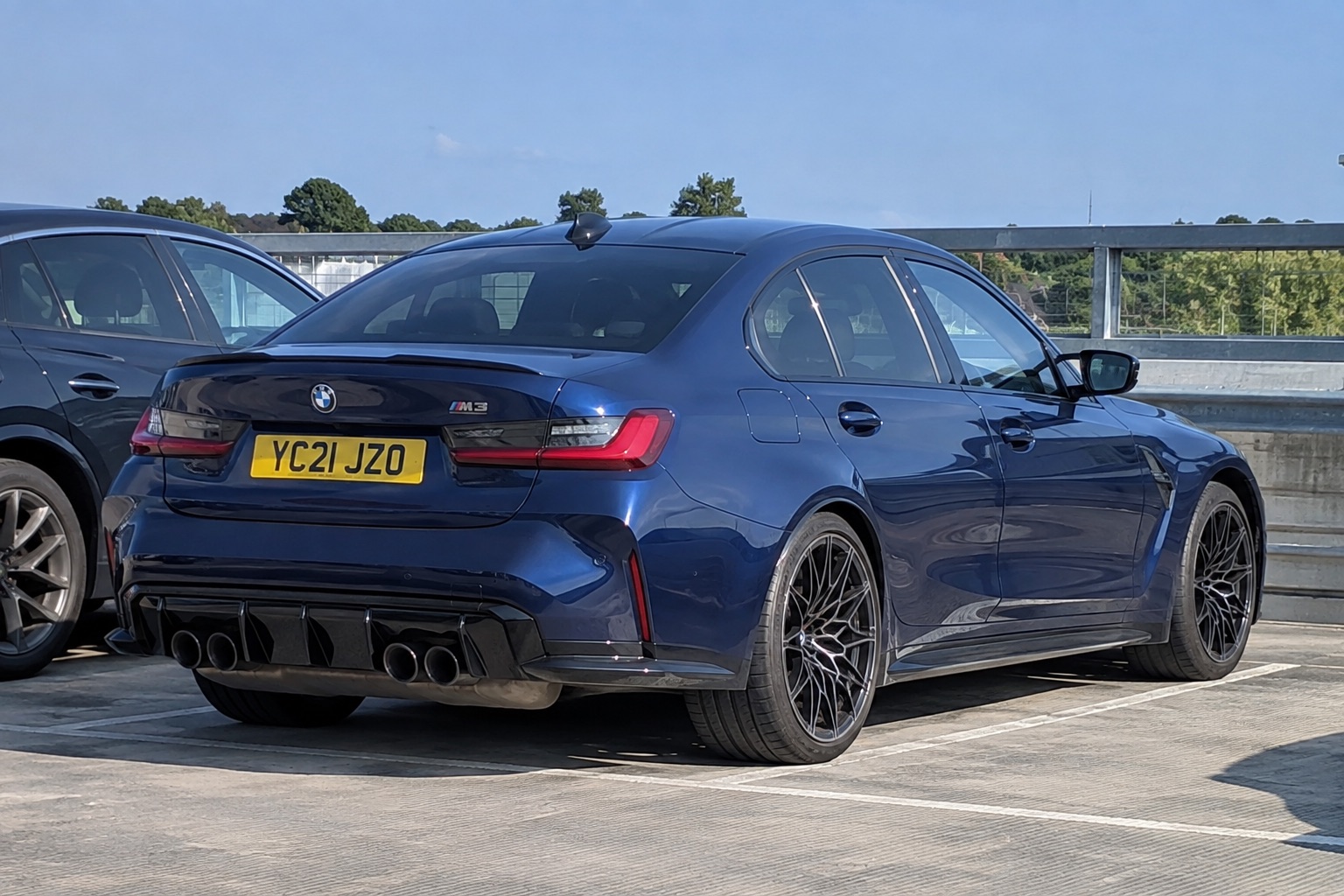
Pick the shade you're thinking of for the front and rear. The car shows roughly how it looks, and each window gets a verdict for New South Wales, allowing for the light your factory glass already blocks.
Film on the front side windows
Film on the rear windows
- Legal
Front side windows
50% film on clear glass ≈ 40% light through. New South Wales allows 35% or lighter.
- Legal
Rear side windows
25% film on clear glass ≈ 20% light through. New South Wales allows 20% or lighter. 20% only if the car has a rear vision mirror on each side; with only a driver's side mirror the limit is 35%.
- Legal
Rear window
25% film on clear glass ≈ 20% light through. New South Wales allows 20% or lighter. 20% only if the car has a rear vision mirror on each side; with only a driver's side mirror the limit is 35%.
Borderline means the answer depends on your glass: factory glass lets through 70–85% before film. Ask your installer to meter the window after fitting.
The darkest film you can fit
The front side windows must let through at least 35% of light. That is measured through the glass and film together, so on typical factory glass (about 80%) you need film of about 43.8% or lighter. The darkest common shade that stays legal on typical glass is 50%. The rear side windows and rear window must let through at least 20%.
Factory glass isn't clear: it typically lets through 70–85% before any film goes on, and the two multiply. That's why film rated at the legal number usually meters too dark. How film combines with factory glass.
Other rules
| Rule | New South Wales |
|---|---|
| Windscreen | The windscreen must let through at least 70% of light and cannot be filmed, except for a band across the top covering the area above the wiper sweep or the top 10% of the windscreen, whichever is greater. |
| Reflective film | Tinted glass must not reflect more than 10% of light, so mirror-like film is not allowed. |
| Mirrors | A rear vision mirror on each side is needed to use 20% film (or any darkness on a goods vehicle) behind the driver. |
| Penalty | Using a vehicle that does not meet the light vehicle standards is an offence with a maximum fine of 20 penalty units, and illegal tint will fail the yearly pink slip inspection. |
| How it's measured | Glass and film together, as a tint meter reads the window |
Medical exemptions
No medical exemption is set out in the rules or in Transport for NSW's window tint fact sheet.
Worth knowing
- Limits are for the glass and film together, so factory privacy glass plus film must still meet them; if privacy glass is already darker than the limit, no film can be added.
- Cars first registered before 1 August 1994 may keep darker glazing fitted before that date.
- Spray-on tint and damaged film that affects the driver's view are not allowed.
See the shades
See this tint on your own car.
The picture above is drawn over a stock photo. The studio renders tint onto a photo of your car, at your angle and in your light. Upload a photo, open Window tint and choose a shade.
See this tint on your own carBoth the visualiser and the render are approximations of how film looks. Ask your installer to show samples and meter the result.
Questions
What is the darkest legal tint in New South Wales?
The front side windows must let through at least 35% of light. That is measured through the glass and film together, so on typical factory glass (about 80%) you need film of about 43.8% or lighter. The darkest common shade that stays legal on typical glass is 50%. The rear side windows and rear window must let through at least 20%. These answers are for passenger vehicles (saloons, hatchbacks, estates, SUVs); the table above has the rules for goods vehicles (vans, utes, trucks).
Is 5% tint legal in New South Wales?
On the front side windows, 5% film is too dark (about 4% through on typical glass; limit 35%); on the rear side windows and rear window it is too dark (about 4% through on typical glass; limit 20%). 20% only if the car has a rear vision mirror on each side; with only a driver's side mirror the limit is 35%. These answers are for passenger vehicles (saloons, hatchbacks, estates, SUVs); the table above has the rules for goods vehicles (vans, utes, trucks).
Is 20% tint legal in New South Wales?
On the front side windows, 20% film is too dark (about 16% through on typical glass; limit 35%); on the rear side windows and rear window it is too dark (about 16% through on typical glass; limit 20%). 20% only if the car has a rear vision mirror on each side; with only a driver's side mirror the limit is 35%. These answers are for passenger vehicles (saloons, hatchbacks, estates, SUVs); the table above has the rules for goods vehicles (vans, utes, trucks).
Is 35% tint legal in New South Wales?
On the front side windows, 35% film is too dark (about 28% through on typical glass; limit 35%); on the rear side windows and rear window it is legal (about 28% through on typical glass; limit 20%). 20% only if the car has a rear vision mirror on each side; with only a driver's side mirror the limit is 35%. These answers are for passenger vehicles (saloons, hatchbacks, estates, SUVs); the table above has the rules for goods vehicles (vans, utes, trucks).
Can I tint my windscreen in New South Wales?
The windscreen must let through at least 70% of light and cannot be filmed, except for a band across the top covering the area above the wiper sweep or the top 10% of the windscreen, whichever is greater.
Is there a medical exemption for tint in New South Wales?
No medical exemption is set out in the rules or in Transport for NSW's window tint fact sheet.
What is the fine for illegal tint in New South Wales?
Using a vehicle that does not meet the light vehicle standards is an offence with a maximum fine of 20 penalty units, and illegal tint will fail the yearly pink slip inspection.
Sources
Checked against these in November 2026. Laws change: if you're close to a limit, confirm with the licensing authority or your installer before you fit film. This page is a guide, not legal advice.